Español
 Français
 Deutsch
 lingua italiana
 Polski
 Norsk språk
 Portugues
 العربية



Specifications
Sandblasted tempered glass
Thickness: 4mm, 5mm, 6mm, 8mm, 10mm, 12mm, 15mm, 19mm
Size: custom size
Color: translucent
Shape: flat
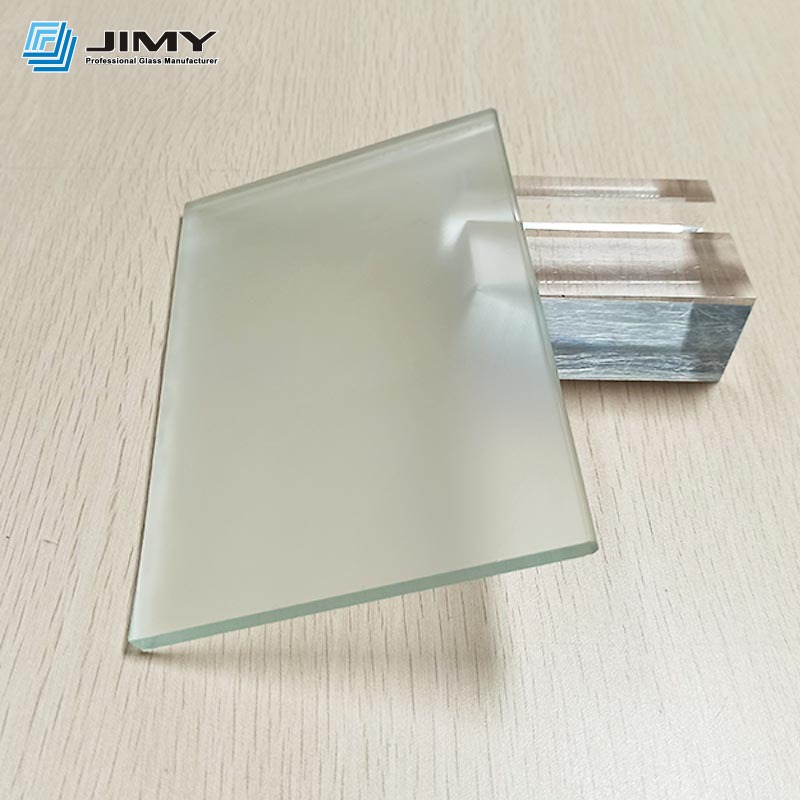
Sample: available (300x300mm)
Description
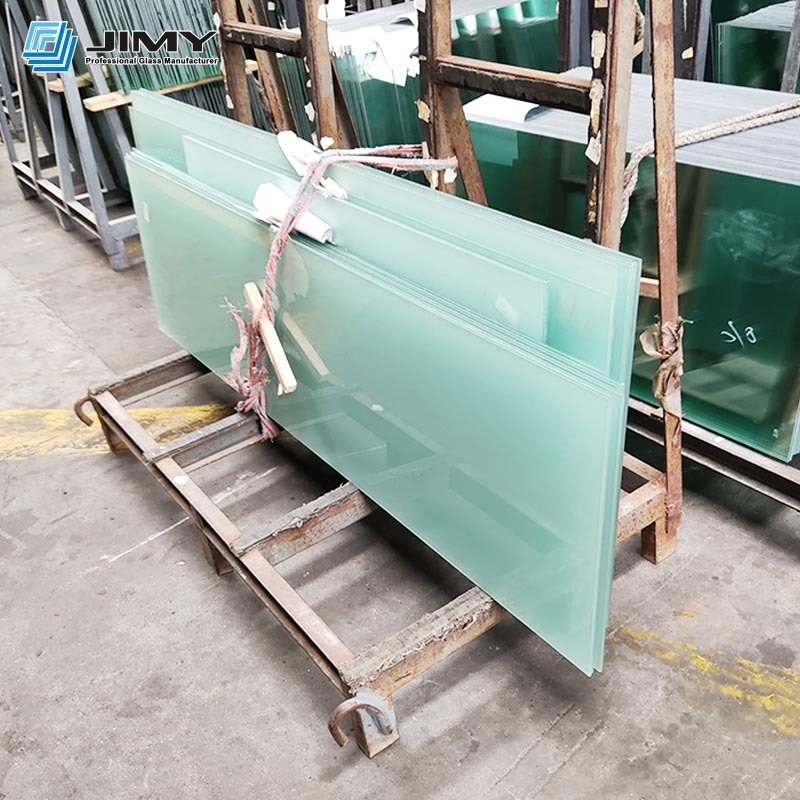
Sandblasted glass is produced by spraying sand at high velocities over the surface of the glass. This gives the glass a translucent surface, which is usually rougher than that obtained by etching. The depth and degree of the translucency of the sand-blasted finishing vary with the force and type of sand used.
Differences Between Etched Glass and Sandblasted Glass
Sandblasted Glass
Sandblasting usually uses a high-speed machine that blasts down on the glass panel with sand, walnut husks or other materials to achieve its look. Sandblast glass etching lets you choose the level of glass opaqueness that best fits your needs and is versatile in many ways when it comes to design.
Etched Glass
Acid etched glass: Acid etched appearance is smoother. Etching glass with acid offers more finishes and various degrees of transparency than standard sandblasted glass. Another major difference between acid etch and sandblast is that light does not transmit through the acid etch as well as the sandblast when lighting up a piece of glass for accent purposes.
How to choose between acid-etched and sandblasted glass?
Acid-etched glass is the perfect choice for more complex, decorative designs. Acid-etching creates a distinctive, smooth, satin appearance which gives a true frosted look. The process leaves a permanent design. Acid-etched glass also tends to be less prone to fingerprints than sandblasted glass.
Sandblasting tends to lead to a consistent, high-quality finish, usually for simple designs on window panels where more frosting is required. Sandblasted glass tends to show up fingerprint marks more readily.
Usage
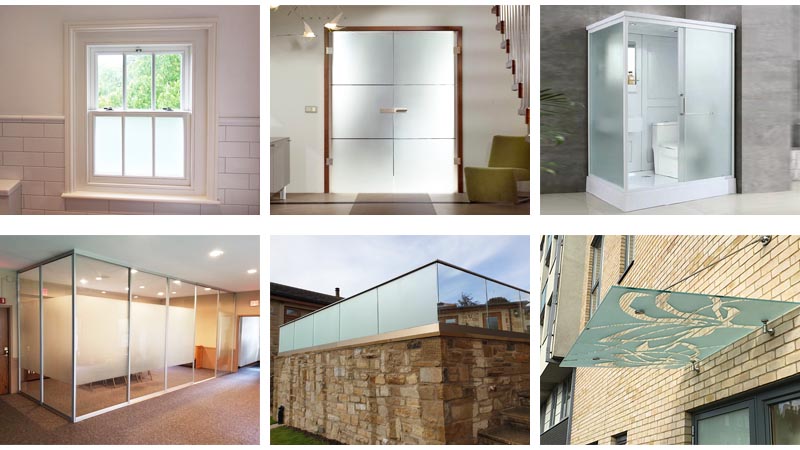
Somewhere privacy needs to be protected and needs light pass through, such as:
- Glass window and door
- Shower room
- Partition wall
- Railing and handrail
- Glass canopy and skylight